Defense Against Constructive Dismissal
A worker can make a constructive dismissal claim against their employer if they are no longer in their employment due to the actions of their employer. The law allows a person to receive damages for the lost income and the cost of finding a new job. It can also cover loss of benefits such as severance pay or unemployment insurance. A person may also be able to recover other losses such as distress and loss of reputation.
Employers have a duty to provide their employees with a safe and healthy work environment, and they can face a constructive dismissal claim if they fail to do so. Examples include failing to ensure that the workplace is free of hazards such as violence and harassment, and allowing or encouraging a hostile work environment.
The main way that employers can defend themselves against a constructive dismissal claim is to demonstrate that they did not breach any of the terms of the employee’s contract. For example, if an employer imposes a change to their employees’ work conditions that contradicts an essential term of the contract, the court will determine whether or not the change was reasonable at the time it occurred.
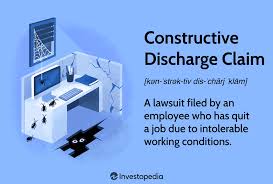
What is the Employer Defense Against Constructive Dismissal?
However, an employer’s defence is more challenging if they did not make any attempt to communicate the change to the affected worker before implementing it. This means that employees should immediately address any concerns about a potential breach of the contract by communicating their objections to their employer in writing as soon as they notice that their working conditions have changed in a significant manner.
For example, imagine your manager reduces your salary without providing any explanation or justification. This could be a form of constructive dismissal, because it is an action that fundamentally changes the specific terms of your contract and makes it intolerable.
A claim for constructive termination will only succeed if the complainant can prove that the change to their working conditions was unreasonable. In addition, they must be able to show that this change caused them to resign from their employment. The evidence required for this includes written communications, audio recordings, witness statements and any other physical or digital evidence that would prove their case.
An experienced Toronto constructive dismissal lawyer will be able to help a complainant develop the necessary evidence and file a claim in the appropriate court. They will also be able to negotiate the best possible settlement with the employer for their damages.
A successful claim for constructive dismissal can be financially damaging for a company because of the need to pay out severance pay, damages and other compensation. The impact can be even greater for smaller companies that can’t afford to pay out a large sum of money. In addition, it is difficult to find a new job when you are a former employee of the company and have to disclose that fact on your resume and during interviews.